

The review shows that humans and cows share surprisingly similar archaeal communities, often dominated by Methanobrevibacter species. These microorganisms play important roles in gut metabolism and interactions with other microbes, but are also responsible for methane production. The researchers explore how these communities interact with their hosts and how they could be linked to human health and more sustainable agriculture.
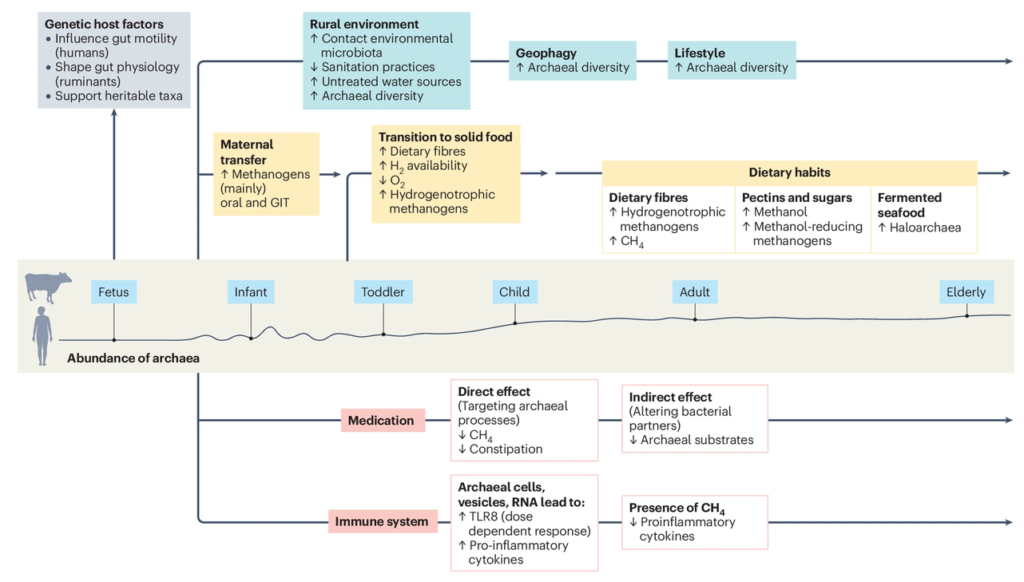
Overview of the principal drivers of archaeal variation, including diet, environmental exposure, developmental stage, host genetics or heritability, and antimicrobial interventions from the fetal period through infancy, toddlerhood, childhood, adulthood and old age: horizontal trajectory represents progression across the human lifespan, with the relative abundance of archaea depicted as a fluctuating line from left to right.
These insights highlight the importance of understanding archaea as part of the mammalian microbiome and show how studying different host species can help us better understand microbial communities, human health and methane emissions.