

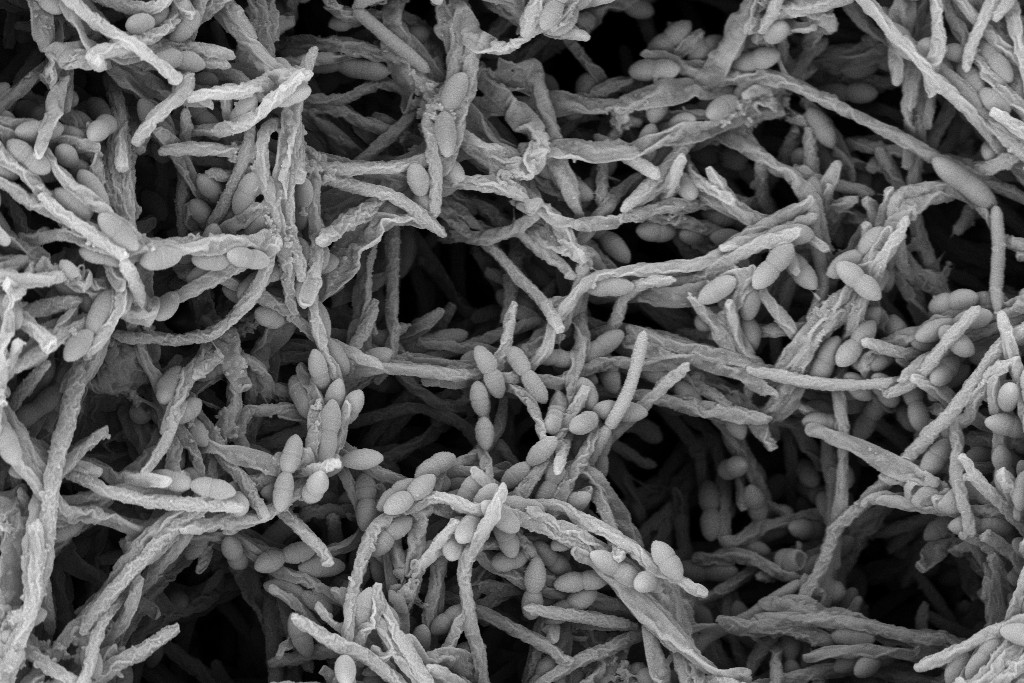
Combining a meta-analysis and a mechanistic study for validation, CoE Deputy Director of Research Christine Moissl-Eichinger and her lab (Moissl-Eichinger lab at MedUni Graz), with first author Rokhsareh Mohammadzadeh, and CoE Key Researchers Gregor Gorkiewicz, Christian Diener and Alexander Loy (University of Vienna), challenge the long-held belief that Methanobrevibacter smithii – the most common archaeon in the human gut – is purely a “commensal” or even a “beneficial” microbe.
By analyzing nearly 3,000 fecal samples across 19 clinical studies, they found that while archaeal patterns vary across diseases, M. smithii is consistently and significantly enriched in patients with colorectal cancer (CRC). Using metabolic modeling and mechanistic experiments, they found that M. smithii is not a passive component of the microbiome but actively supports bacteria driving CRC progression, such as Fusobacterium nucleatum.
Only in this cross-domain partnership do the microorganisms exchange important metabolites and produce specific metabolites that may directly influence the tumor environment. Thus, to truly understand complex diseases, we need a cross-domain view of the microbial ecosystem.