

Red-Green Projects
Our Cluster of Excellence (CoE) aims to advance microbiome research by combining environmental (“green”) and medical (“red”) approaches to support planetary health.
By breaking down traditional research barriers and fostering interdisciplinary collaboration, we will develop innovative research concepts and methods, with the ultimate aim of devising strategies for microbiome prediction and intervention.
To further this mission, we recently launched an internal call for proposals designed to forge new synergies between the two fields. This call tasked Early Career Researchers (ECRs) with leading projects that would expand the scope of our existing work packages through interdisciplinary collaboration.
We received ten submissions in total, all of which were of a high standard. Three were ultimately selected for funding. They span diverse research fields, including microbial niche colonization via wax-ester degradation, metabolic modelling of microbial communities during recovery and intervention, and circadian clocks in microbial activity and community assembly.
Despite their differences, all of these proposals share one feature: interdisciplinary collaboration and the breaking down of traditional research barriers.
Red-green Project #1
Endogenous circadian rhythms and ecosystem inertia as hidden drivers of microbiome dynamics
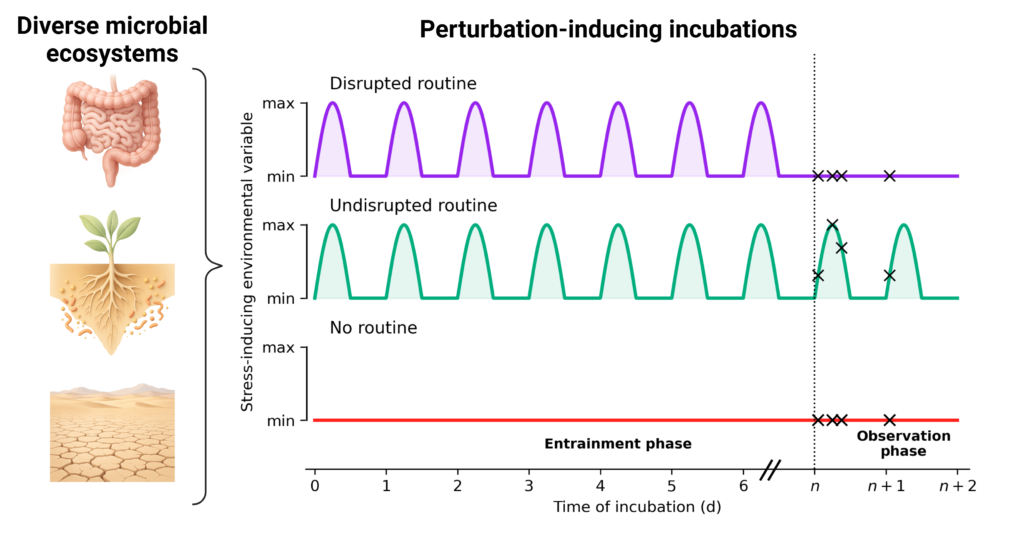
The study will investigate “ecosystem inertia,” a phenomenon where microbial communities maintain rhythmic biological cycles via endogenous circadian clocks even after external environmental fluctuations have ceased. The research aims to identify how these internal clocks regulate microbial activity and community assembly across diverse microbiomes, including the human gut, rhizosphere, and desert biocrusts. This work will shed light on how intrinsic temporal regulation drives microbiome resilience, with broad implications for human health, agriculture, and environmental stability.
Thayer Taft
(PhD student, CeMESS, University of Vienna)
André Carvalho Araújo
(PhD student, CeMESS, University of Vienna)
Red-green Project #2
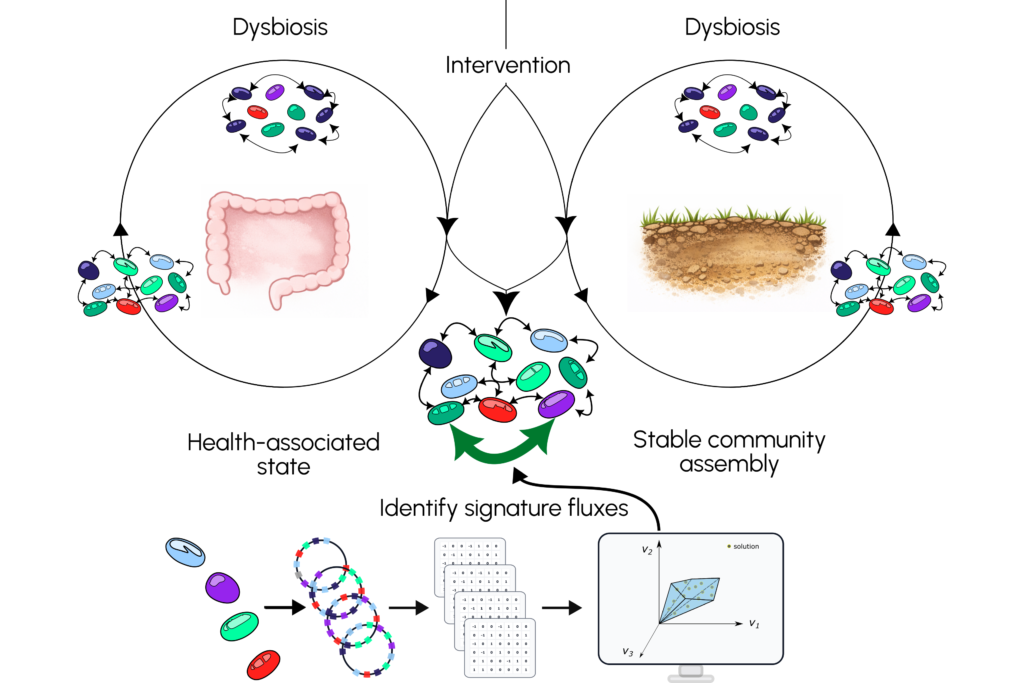
INFORM: Intervention-Driven Flux and Organisation pRinciples in Microbiomes
INFORM will investigate whether flux-based principles of recovery and organisation are conserved across ecosystems and whether the capacity to predict microbiome intervention and biotherapy efficacy is transferable from human gut microbiomes to plant-soil microbiomes. Furthermore, it will establish a framework for predicting intervention outcomes based on the interactions between introduced strains and environmental conditions.

Patrick Schimmel
(Postdoc, Medical University of Graz)
Benjamin Coltman
(Postdoc, CeMESS, University of Vienna)
Red-green Project #3
Cross-ecosystem analysis of wax ester degradation
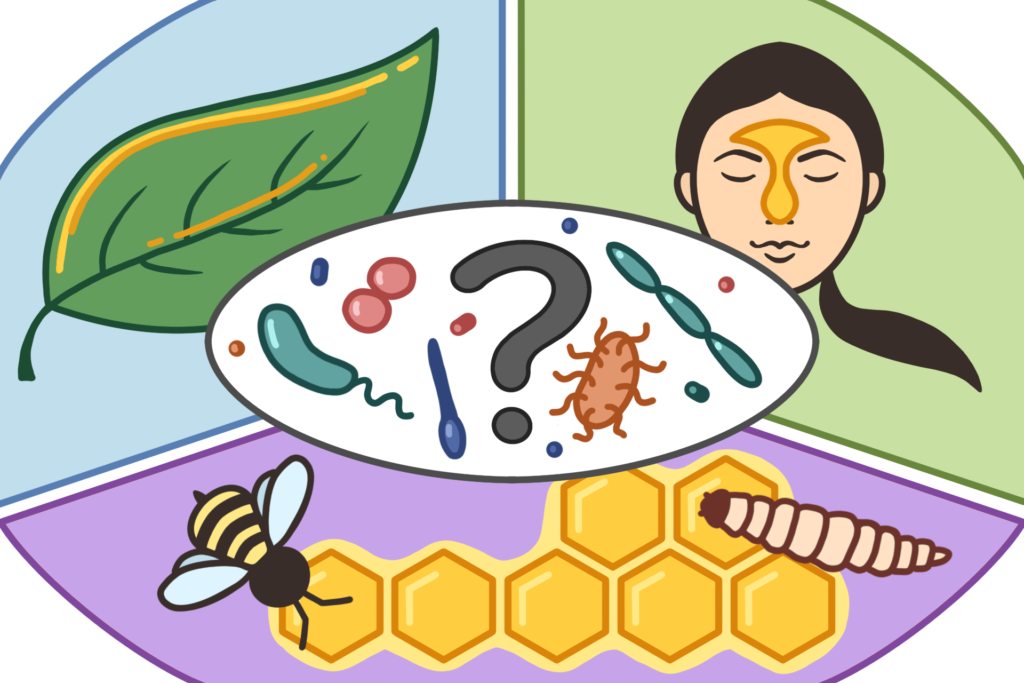
This study explores how microorganisms inhabiting hydrophobic, lipid-rich niches – such as human skin, beeswax, and plant cuticles – evolve specialized enzymes to break down complex wax esters. By combining biological transcriptomics with chemical protein profiling, this research aims to identify these unique wax hydrolases and determine how they facilitate microbial colonization and metabolism. This work could lead to breakthroughs in human health, innovative pest control for wax moths, and sustainable biotechnological solutions for recycling waxes and polyesters.

David Szamosvari
(Postdoc, Faculty of Chemistry, University of Vienna)
Find us on social media