

We’ve just wrapped up two weeks filled with curiosity, exciting questions, and sparkling eyes. Together with more than 600 scientists, the Vienna Children’s University inspired over 4,000 children to get excited about research and science—and we had the opportunity to introduce a new generation to the fascinating topic of the microbiome through engaging lectures and interactive workshops.
The Kinderuni Wien opening lecture by CoE Director of Research Michael Wagner and CoE Board of Directors member Angela Sessitsch introduced more than 100 young participants to the fascinating world of the microbiome.
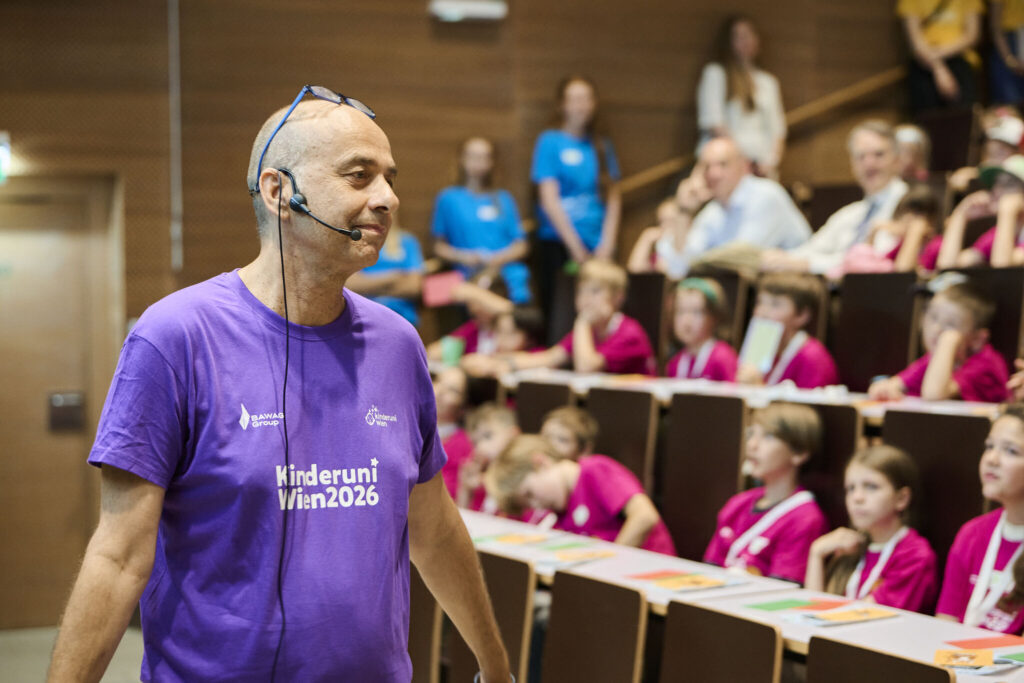
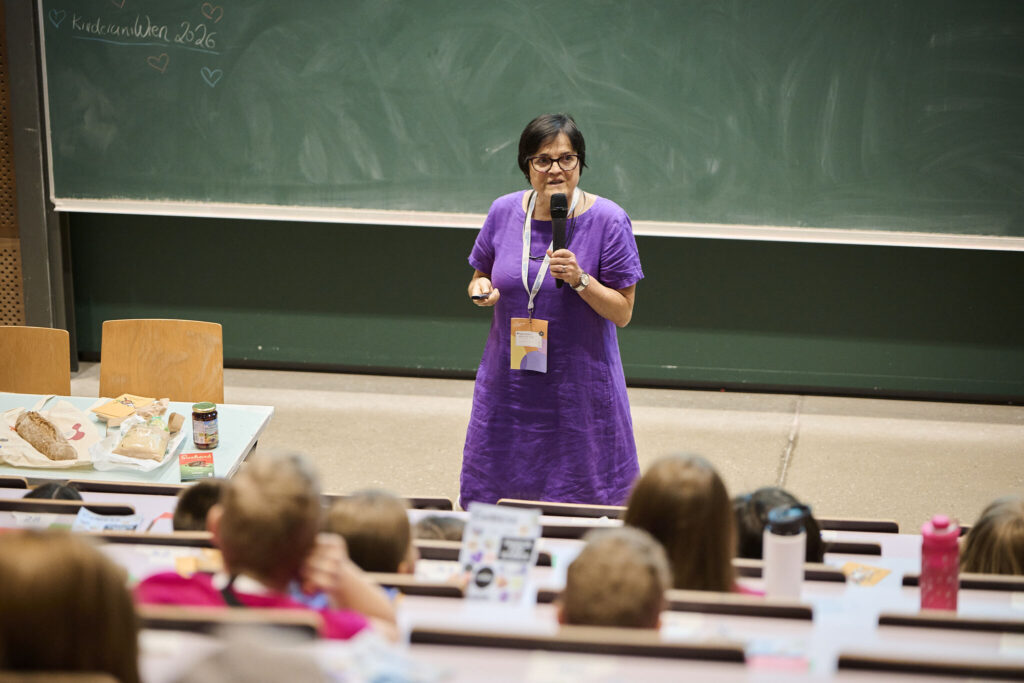
©Kinderbüro der Universität Wien/APA-Fotoservice/Martin Hörmandinger
CoE Deputy Director of Research Christine Moissl-Eichinger shared fascinating insights into the world of farts—who farts, why, when, and for how long. And what farting has to do with our diet and the climate. CoE Board of Directors member Alexander R. Moschen took us on a child-friendly “journey through the gut” with exciting endoscopic videos.
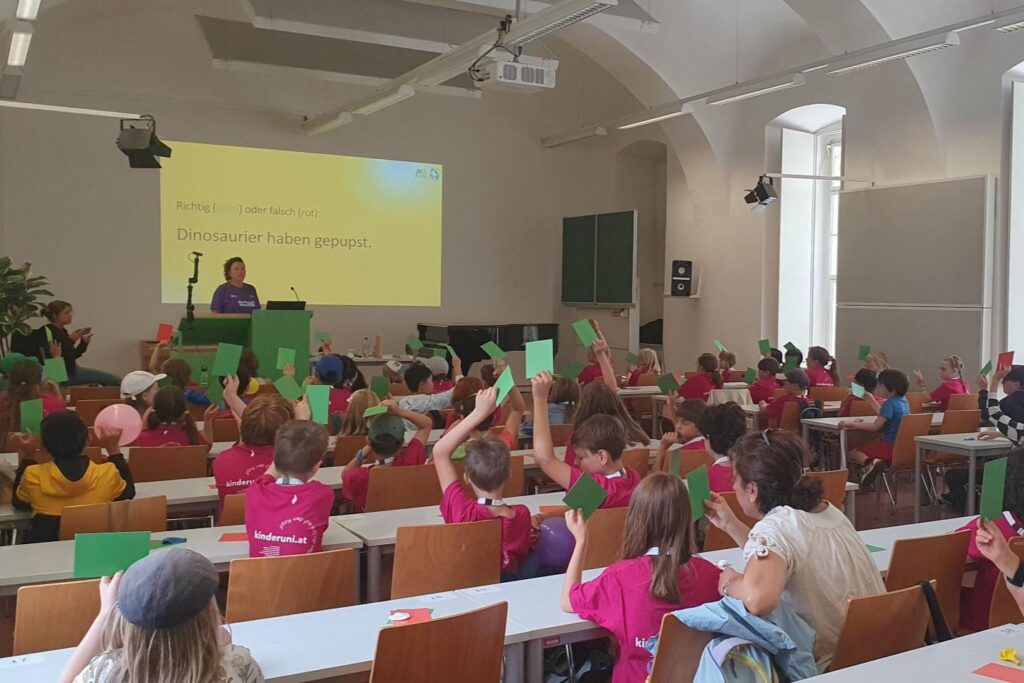
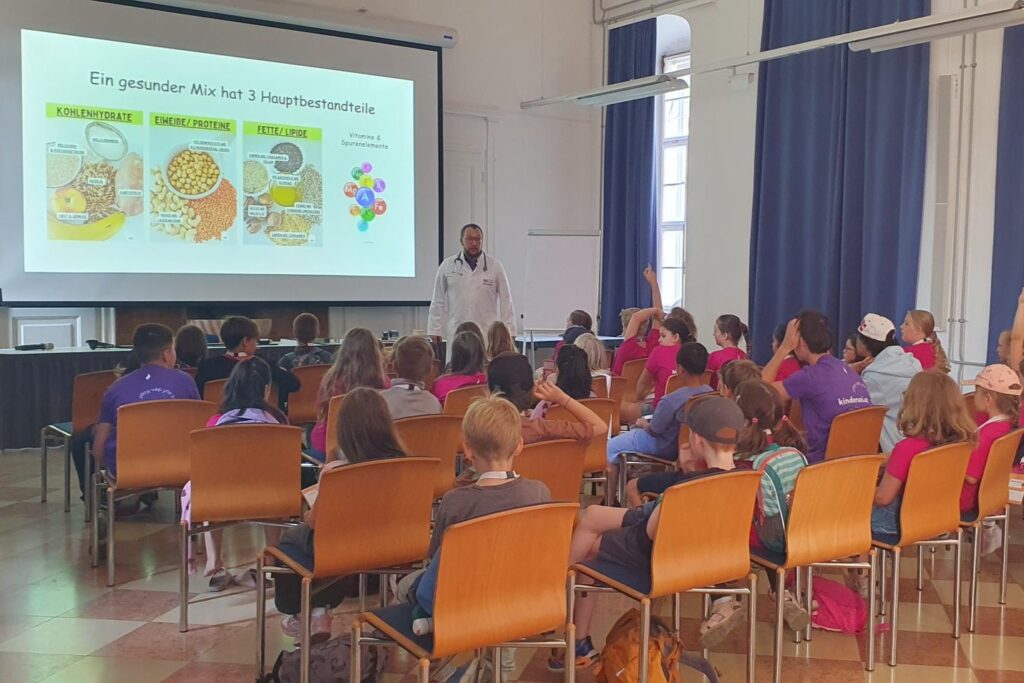
©CoE Microplanet
Tanja Kostic, head of the Bioresources Competence Unit at AIT, along with CoE PhD student Lisa-Carolin Bilz and AIT researcher Clara Pogner, led a fascinating workshop on “The Secret Rulers of the World”.
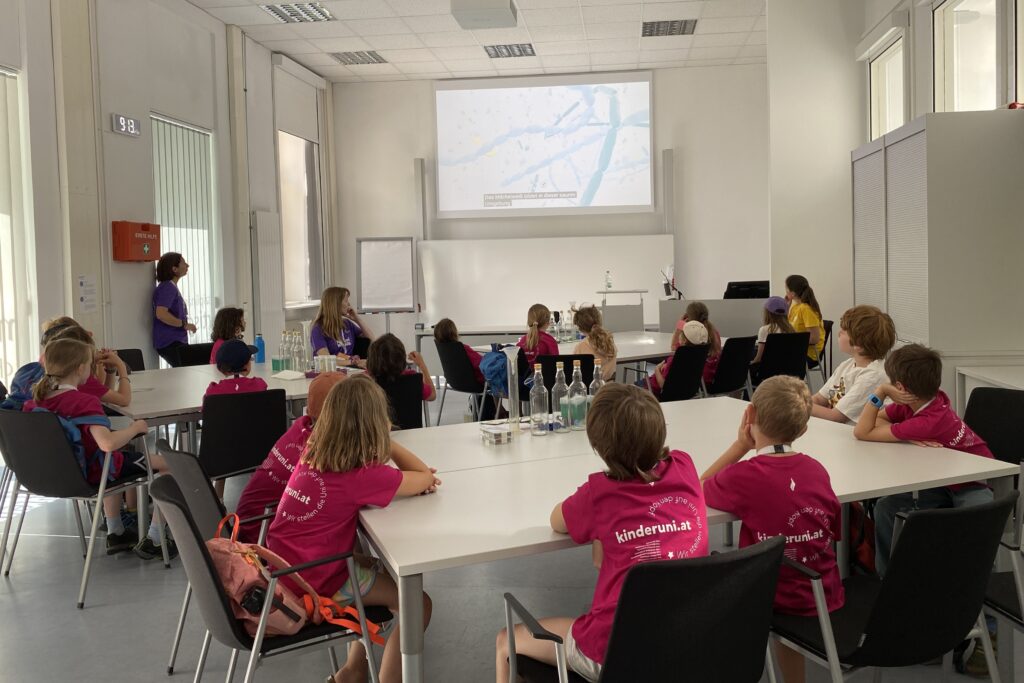
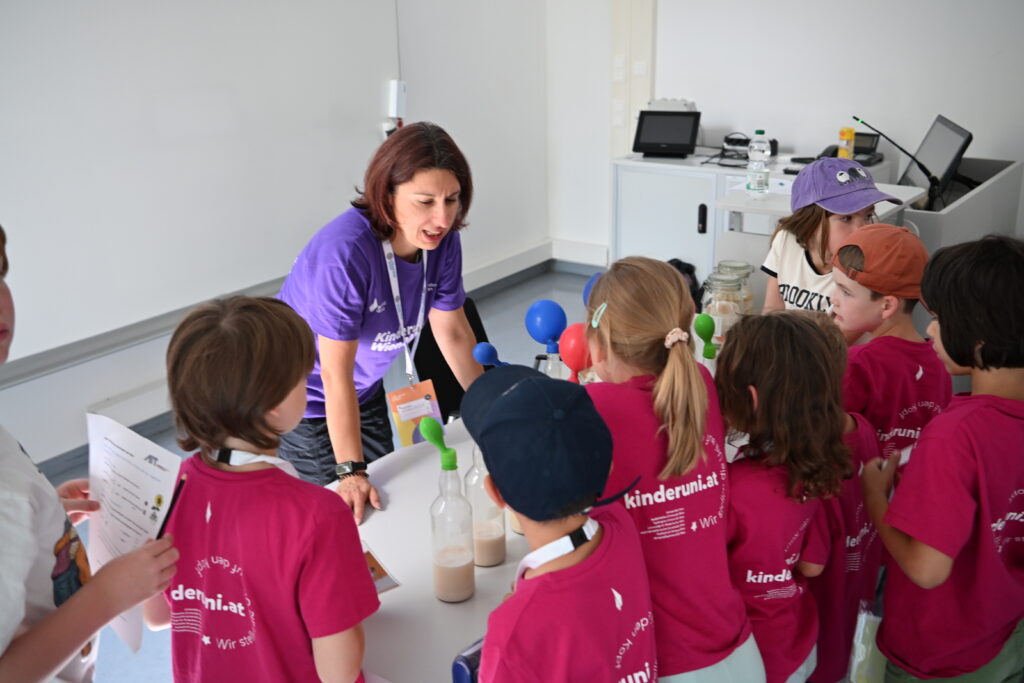
©AIT/Pogner
Eliška Bauer, Nadezhda Todorova, Krishna Suresh, Christina Kumpitsch, Shabnam Azimi, and Alexander Mahnert, PhD students and Postdocs from the Moissl-Eichinger Lab at MedUni Graz held two workshops on „Invisible Austronauts“ and „Talking Microbes“.
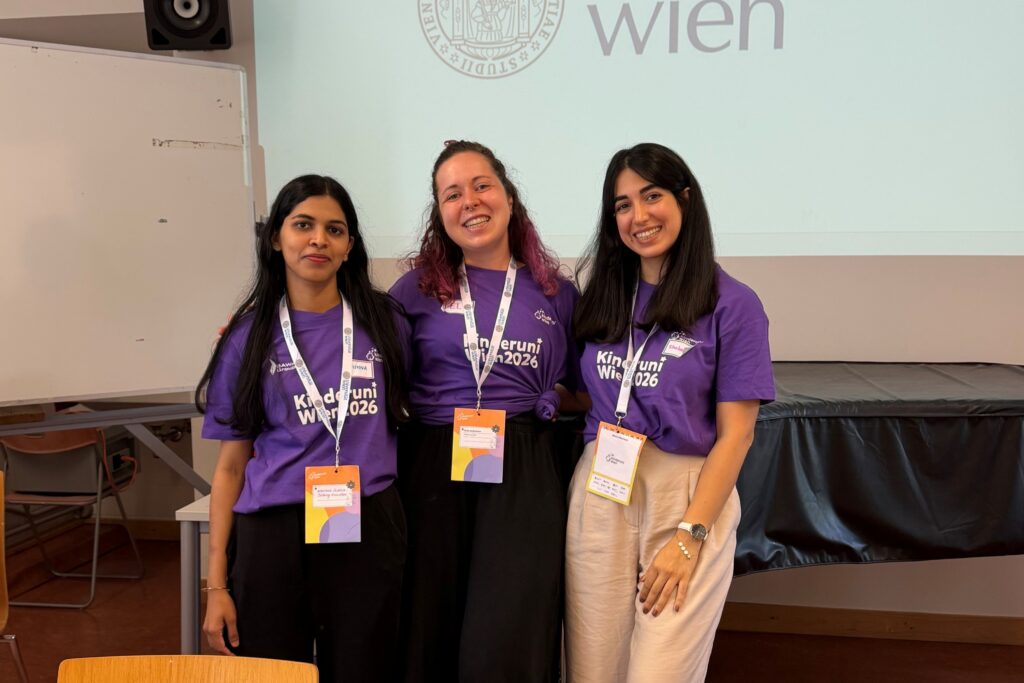
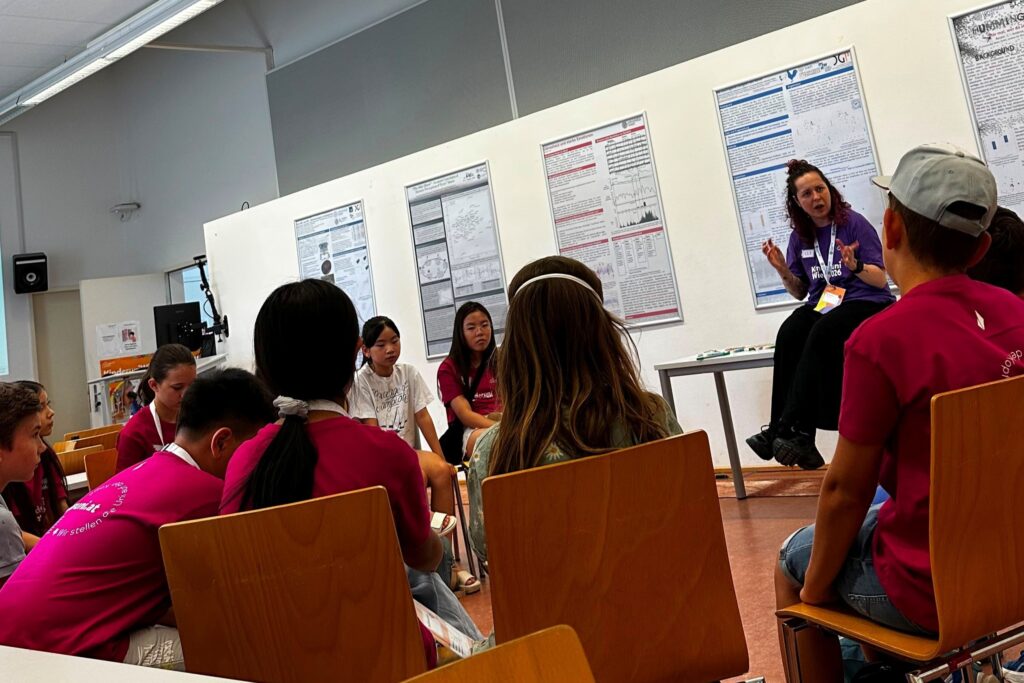
©Sedláčková
A big thank you also goes to Annelieke Overbeeke (Darmkram) and her workshops “Become a Gut Detective”, which show that the key to healthy eating lies in sparking children’s curiosity about food. Who can eat a rainbow?
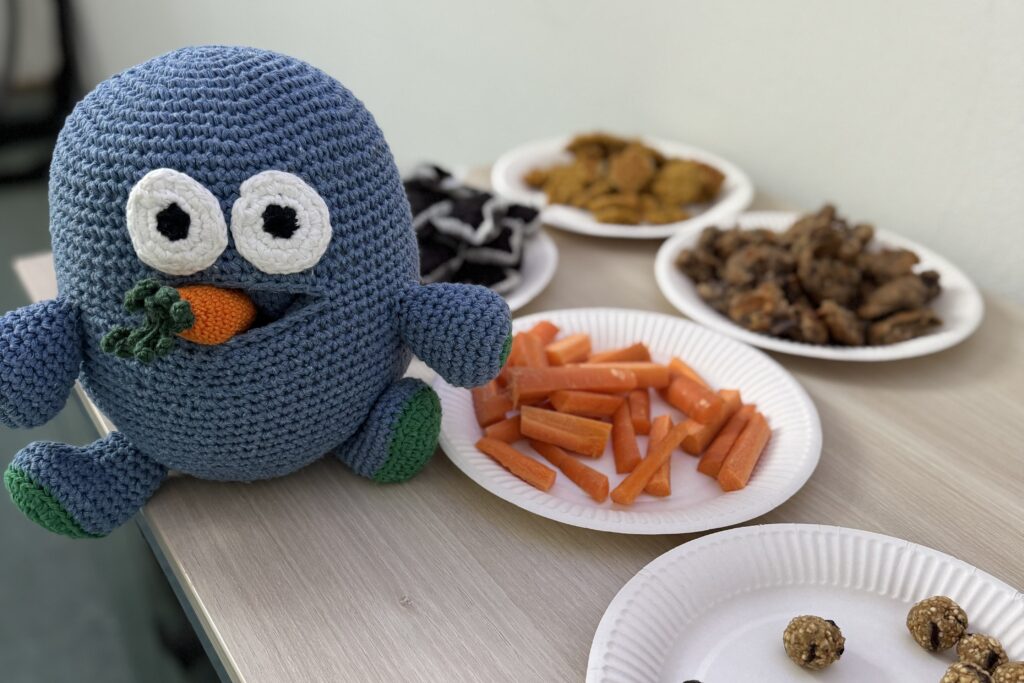
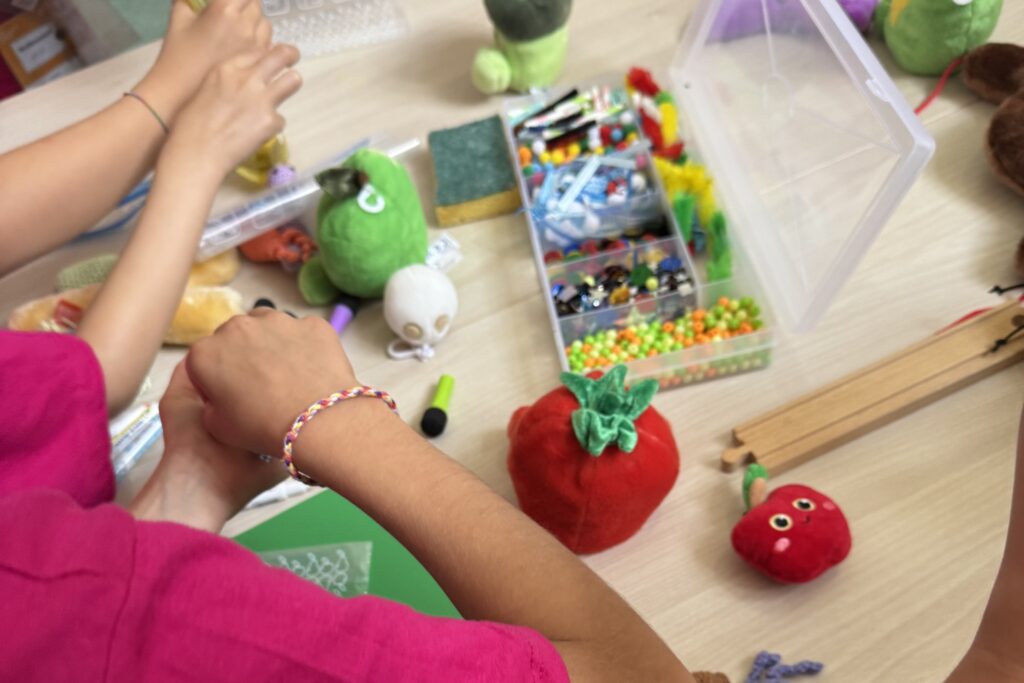
©Darmkram
CoE technician Stefan Thiele provided fascinating insights into the world of marine microorganisms in his lecture “The Marine (Micro)biome,” and CeMESS colleagues Bettina Glasl, Hannah Koch, Jakob Rauter, and Stefan Schuster did the same in their workshop on the “Superpowers of Marine Animals”.
TU colleagues Matthias Schittmayer-Schantl and Georg Ramer (TU Vienna) provided exciting insights into the structure of plastics in their workshop “Molecular Detective.”
CoE postdoc Gergely Odor, CoE PhD student Emily Grubb, and Orsolya Rita Bajer-Molnár from the group of CoE Board of Directors member Andreas Bergthaler explored how infectious diseases spread through social networks, how outbreaks emerge, and how wastewater surveillance can help detect infections at the population level in their workshop “Virus Detectives”.
Over the past two weeks, participants have conducted experiments, used microscopes, done research, engaged in discussions, and—above all—discovered a passion for science. From microorganisms and viruses to the gut and the microbiome, all the way to marine life, children were able to experience research firsthand and become little scientists themselves.
A heartfelt thank you also goes to all the students, postdocs, technicians, lab and organizational teams, the numerous volunteers, and the entire Children’s University team at the University of Vienna, whose dedication, time, and enthusiasm made these two weeks unforgettable. 🩷
We’re already looking forward to the Vienna Children’s University 2027! 🚀